
Icaza Trust participates as sponsor at the STEP Panama Summit 2026
March 3, 2026
Escrow Accounts: security and neutrality for your transactions
June 30, 2026
Trusts, Foundations, and Legal Structures Enable Families and Businesses to Protect Their Assets Against Political and Tax Volatility in the Region
Article by Gunther Felix – Collaboration with Luis Martínez for LexLatin
The political and economic landscape in Latin America has entered a period of volatility that has led high-net-worth families and corporate groups to reassess how they structure, protect, and project their assets. Frequent tax reforms, regulatory changes, and institutional tensions have increased interest in jurisdictions that offer predictability and stability, and above all, sophisticated legal tools for wealth management.
In this context, Panama has consolidated its position not only as a regional financial hub, but also as a strategic jurisdiction for implementing asset protection and succession planning strategies through trusts and other legal vehicles tailored to the complexity of the Latin American environment.
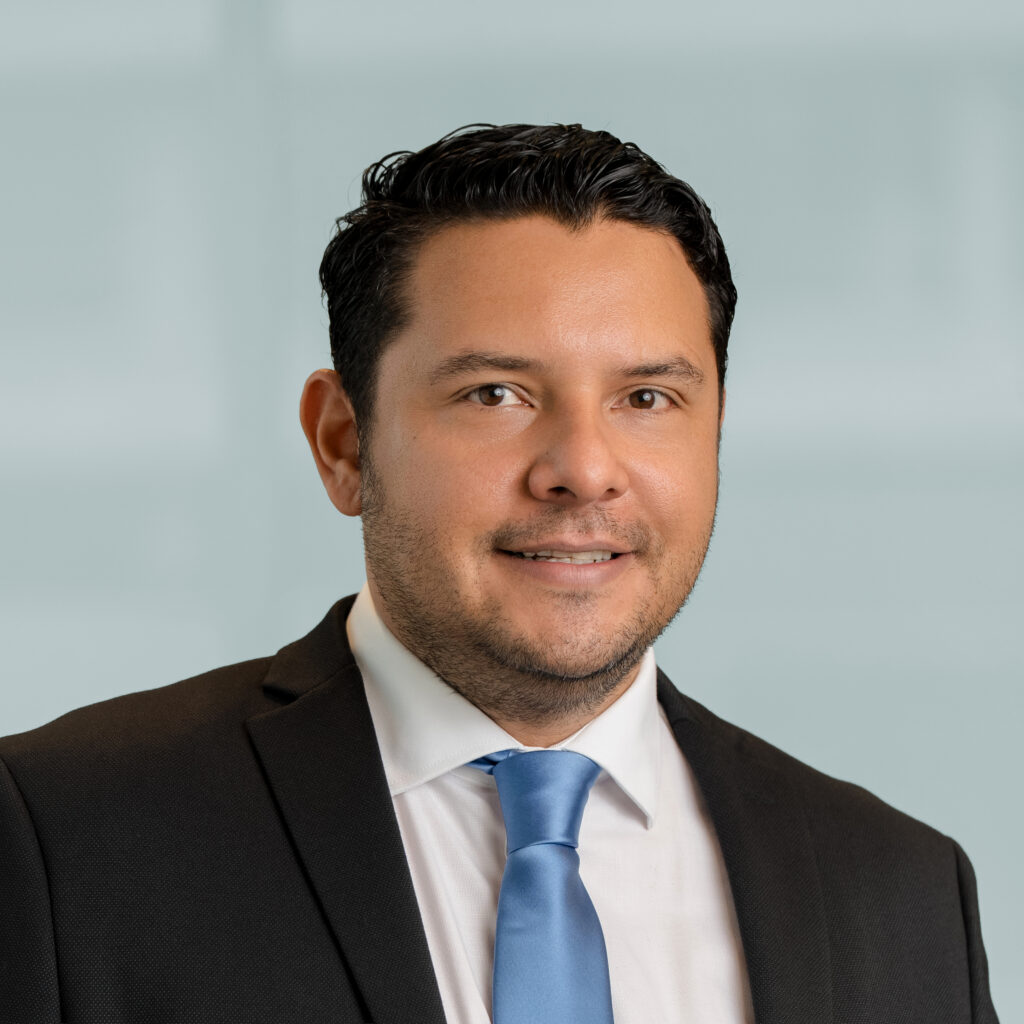
According to Luis Martínez, Deputy Manager of Icaza Trust Corporation at Icaza, González-Ruiz & Alemán, this trend is not merely a reaction to current conditions, but part of a structural shift: an increasing number of Latin American business owners are adopting a comprehensive and preventive approach to wealth management.
Panama’s Trust Law (Law No. 1 of 1984) has gained renewed relevance in this scenario. Martínez explains that Panamanian trusts offer patrimonial autonomy, isolating assets from external contingencies and protecting them from claims by creditors of either the settlor or the trustee, except in very specific cases of fraud. This feature is particularly important for those operating in environments where the rule of law is subject to recurring challenges.
This shift means that, instead of reacting to tax reforms or regulatory changes, business-owning families are undertaking thorough reviews of their structures. This process includes verifying asset ownership, ensuring asset traceability, aligning legal structures with economic reality, and updating related-party agreements and family governance protocols.
Investment Risk Radar for Latin America: What Legal Reforms and Political Uncertainty Scenarios Are Expected in 2026?
From Reaction to Anticipation
The transition from reactive management to preventive planning also reflects greater sophistication in compliance matters. Today, wealth structures can no longer be designed without regard to international transparency and reporting standards.
The attorney notes that wealth structures are reviewed taking into account reporting obligations under automatic exchange of information regimes such as FATCA and CRS, a process that goes hand in hand with strengthened corporate governance and risk management.
“Additionally, it has become increasingly common to formalize continuity and contingency rules for scenarios such as incapacity, death, the termination of relationships between partners or family members, and periods of financial stress. From the design phase, consistency criteria are incorporated, such as the tax residence of the members, the location and nature of the assets, and the effects of asset transfers, considering the potential impact of capital gains taxes or inheritance taxes, as applicable,” he explains.
The factors driving this transition are multiple. Political and economic volatility remains a central driver, accompanied by tax reforms, regulatory changes, and contingencies specific to each business environment.
This is further compounded by an increasingly demanding financial environment, in which banking institutions require transparency, traceability, and thorough due diligence. As a result, wealth structures must be coherent, well-documented, and sustainable over time, combining operational efficiency with legal and tax certainty.
“The reassessment or revision of these structures should not be limited to risk mitigation, but should focus on building tax-consistent structures with sufficient economic substance and documentary support to withstand potential reviews, audits, or information requests from the authorities,” the expert emphasizes.
How Has Panama’s Removal from the EU Grey List Impacted the Financial System and Investment?
In this new environment, Latin American entrepreneurs are increasingly turning to a combination of legal tools that allow them to structure ownership, manage risks, and ensure the continuity of their wealth.
According to Martínez, there are three main approaches to structuring and protecting wealth. The first focuses on fiduciary vehicles, such as trusts (Law No. 1 of 1984) and private interest foundations (Law No. 25 of 1995), which make it possible to establish clear rules for administration, distribution, and succession, while organizing ownership for compliance and reporting purposes.
The second approach involves holding structures, which centralize investments and help isolate risks, facilitating both operational and tax management. Finally, the third line includes governance instruments that set out a framework of rules to ensure the proper administration of assets. These include shareholder agreements and family protocols, which regulate decision-making processes and the transfer of control.
“Beyond the name of the vehicle, what truly matters is its rationality from a practical, legal, tax, and economic standpoint, so that the structure effectively responds to the specific needs of each family or business,” he notes.
In the expert’s view, there is no single instrument that can be considered universally superior. The appropriate solution depends on wealth objectives, the needs of each family or individual, and their generational horizon, taking into account asset typology, family or business dynamics, the jurisdictions involved, and the tax residence of their members.
When the objective is continuity and succession, trusts and foundations allow families to formalize rules and organize ownership for compliance and reporting purposes, thereby reducing uncertainty regarding income attribution, beneficiaries, and asset distribution.
For operational efficiency and investment management, a holding entity facilitates the consolidation of cash flows, withholding tax planning, dividend distributions, and intragroup financing.
“In practice, the most commonly used setup is a combination of a holding structure as the ownership vehicle and a trust or foundation scheme to ensure continuity,” Martínez emphasizes.
Ultimately, the expert explains, the key is not to select a “superior” legal vehicle, but rather to analyze each case and design a structure tailored to specific needs, understanding the advantages of each type of legal entity. In practice, it is common to rely on a combination of several legal vehicles.
Tax Sustainability: Panama’s Ongoing Challenge
Panama and Wealth Diversification
One of the core elements of modern wealth planning is jurisdictional diversification. This strategy helps mitigate country risk and facilitates access to more stable financial markets.
“From a tax perspective, it allows for more predictable management of investment location, cash flows, and eventual capital repatriation, provided it is supported by a genuine economic purpose,” the attorney explains.
However, he warns that this concept has evolved. In the past, diversification was often associated with complex or opaque structures. Today, by contrast, it must be based on criteria of substance, traceability, and tax coherence.
“Diversification should not be aimed at opacity, but at organization,” he stresses.
In this regard, Panama offers a combination of factors that explain its continued relevance as a key jurisdiction. On the one hand, it provides a robust legal framework and legal vehicles widely used in international practice. On the other, it has a financial ecosystem with extensive experience in cross-border transactions and a reputation for reliability.
“This is further supported by the use of the U.S. dollar as legal tender for more than a century, as well as overall stability that favors long-term planning,” he adds.
An additional factor often underestimated is Panama’s cultural and linguistic proximity to the rest of the region.
“When legal documentation is drafted in a different language and under a different legal system, it can become a barrier,” he cautions.
Inheritance Planning: Alternatives for Assets Held by BVI Companies or Located Abroad
Most Common Mistakes
Nevertheless, the expert warns that many families make mistakes when structuring their wealth without an adequate legal strategy.
“The most common mistake is selecting a legal vehicle without conducting a proper tax and risk assessment,” he notes.
According to Martínez, there is no one-size-fits-all formula. What works for one family may be unsuitable for another, depending on factors such as tax residence, asset composition, or specific risk exposure. Ignoring these differences can lead to inefficient structures, costly adjustments, audits, or the need for restructuring.
For this reason, it is essential to seek specialized legal advice in the jurisdiction of tax residence of the family members, ensuring that the structure is durable and truly operational.
Another frequent error is neglecting sound corporate governance, proper documentation, and the economic substance of structures. In practice, many contingencies arise from the lack of supporting records such as minutes, contracts, or evidence of the origin and destination of funds, or from inconsistencies between the legal form and economic reality. These gaps open the door to legal and tax challenges that could have been avoided through comprehensive and orderly planning.
AI, Patents, and Copyright: Trends and Challenges for Latin America in 2026
Succession and Family Business Continuity
One of the main challenges for business-owning families in Latin America is generational succession. In the absence of planning, the transfer of assets can lead to conflicts, business fragmentation, or wealth erosion. In this regard, fiduciary structures play a critical role.
“Their main contribution lies in the clarity they introduce and in their ability to support informed decision-making, which facilitates an orderly transition of wealth,” Martínez explains.
These structures allow families to define management rules, establish distribution criteria, and anticipate contingencies, thereby reducing discretion and potential disputes.
From a tax perspective, they also make it easier to document income attribution, beneficiary status, and the tax treatment of distributions, taking into account factors such as the tax residence of family members and the location of assets—issues that often create challenges during transition and in the effective management of family wealth.
They also enable the separation of economic and political rights, allowing family businesses to maintain operational continuity even in uncertain or conflict-prone contexts.
“In conflict scenarios, having clear rules and documentation significantly reduces the risk of disrupted operations,” he notes.
Private Interest Foundations: A Driver of Blockchain Development in Panama
Transparency, Technology, and Future Trends
The current global environment is marked by increasing tax transparency and the automatic exchange of information between jurisdictions. This shift has also redefined the rules of wealth planning.
“For this reason, investors should not select a structure solely based on cost, but rather on the solution it provides,” Martínez emphasizes.
In this context, economic substance, solid documentation, and regulatory compliance have become indispensable elements for the sustainability of any structure.
Additionally, digital transformation has raised the technical standards expected of trustees and fiduciaries.
Looking ahead, the expert identifies three main trends:
- A preference for simpler and more manageable structures, tailored to the specific needs of each family, particularly in an environment of heightened tax transparency.
- A stronger emphasis on economic substance, documentation, and good corporate governance, ensuring that the structure reflects a consistent and genuine operation.
- Earlier succession and wealth planning, progressively incorporating tax considerations, although still not to the extent required.
Against this backdrop, Martínez concludes that families and businesses are adopting structures with clear rules and advance planning, aligned with current standards. This approach not only protects wealth, but also ensures business continuity, facilitates generational succession, and reduces legal and tax risks—strengthening resilience in the face of regional uncertainty.